Seeing “Spam Likely” on outbound sales calls is frustrating — especially when you’re calling from a real mobile SIM number.
For years, SIM and GSM calls were the gold standard for sales outreach: higher answer rates, better call quality, and more trust than cloud-based numbers. That advantage still exists today — even if it’s no longer automatic.
What’s changed is how spam detection works.
Spam labelling today is driven primarily by calling behaviour, not only by whether a call is SIM-based or VoIP.
While cloud telephony is far more likely to be flagged due to shared numbers, internet routing, and business call identification, SIM and GSM calls can also be affected if calling patterns resemble spam.
Modern mobile carriers and smartphone platforms now use smart algorithms that analyse how you call — your pacing, answer rates, complaints, and consistency — not just how you’re connected.
That said, SIM calls still start with a much stronger trust advantage than cloud calls, and when managed properly, they continue to outperform VoIP by a wide margin.
Table of Contents
1. Why SIM Calls Can Get Flagged as Spam
Mobile carriers and operating systems like Android and iOS continuously monitor calling behaviour across the GSM network.
SIM calls are not inherently risky - in fact, they remain the least likely type of business call to be flagged compared to cloud telephony.
However, SIM numbers are no longer “automatically trusted.”
If a SIM behaves like spam, it can be treated like spam — even when every call is manually placed.
The distinction matters:
- Cloud calls often start with lower trust due to shared infrastructure
- SIM calls start trusted — but that trust must be maintained
Think of SIM reputation like email deliverability: strong by default, fragile if misused.
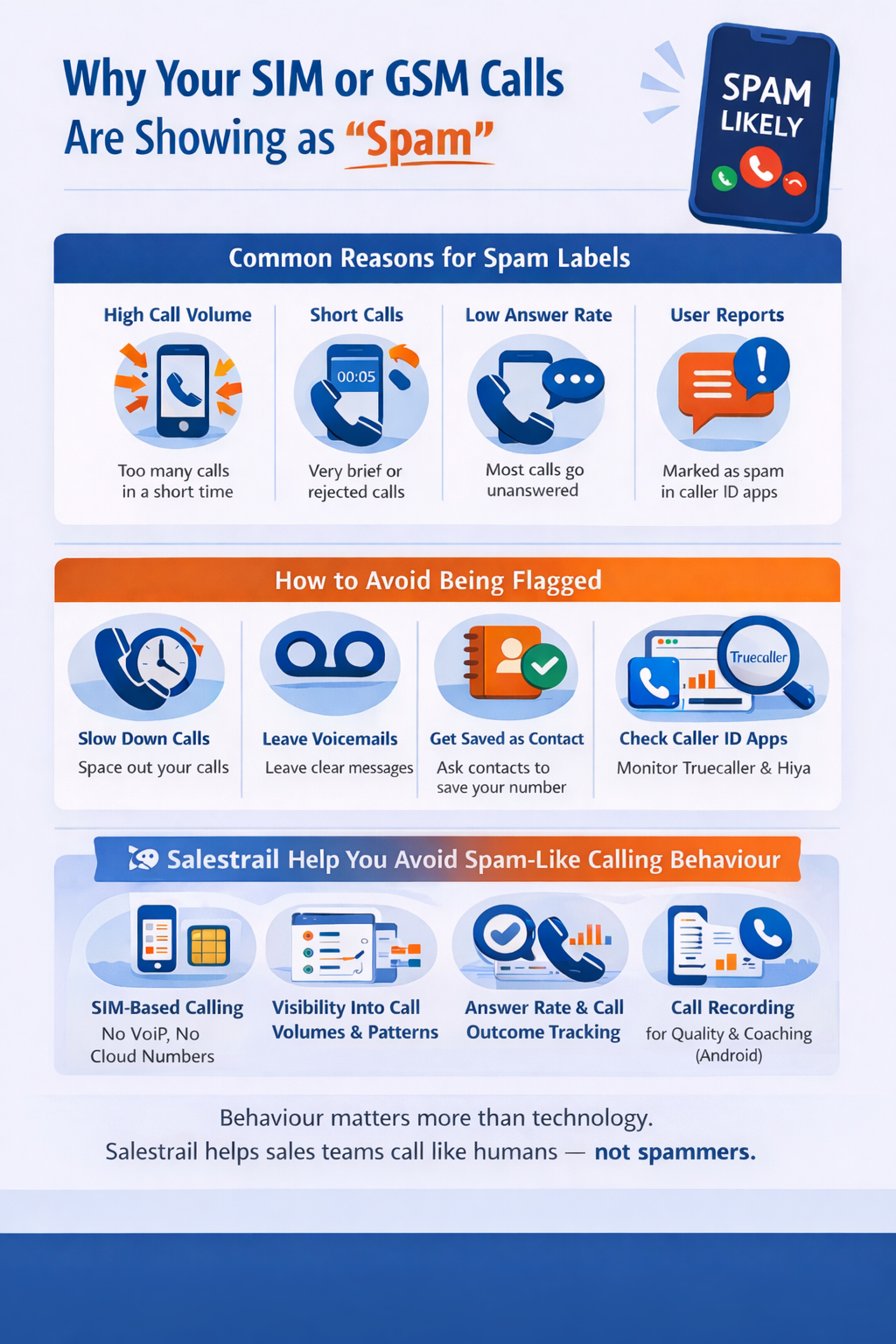
2. Common Behaviours That Trigger Spam Labels
Even on SIM/GSM networks, certain behaviours raise red flags:
- High Call Volume in Short Bursts - Making many calls from one SIM in a short window can resemble automated dialing.
- Very Short or Rejected Calls - Repeated hang-ups or sub-10-second calls signal unwanted and aggressive outreach.
- Low Answer Rates - When most calls go unanswered, networks assume recipients don’t recognise or trust the number.
- User Reports in Caller ID Apps - Apps like Truecaller and Hiya rely on user feedback. A small number of spam reports can impact how your number appears across networks.
- Calling DND or DNC Numbers - Complaints from regulated numbers are one of the fastest ways to damage a number’s reputation.
3. How Sales Teams Can Avoid Spam Labels
The advantage of SIM calls is control — and with the right habits, spam flags are largely avoidable.
- Slow Down Your Calling Pace - Avoid call bursts. Spread calls naturally across the day or rotate SIM usage for higher volumes.
- Leave Proper Voicemails - Voicemails signal real intent and reduce the appearance of nuisance calling.
- Get Your Number Saved - Saved contacts often bypass spam filters entirely and boost trust signals.
- Monitor Caller ID Apps - Check how your number appears on apps such as Truecaller or Hiya. Correcting labels early protects answer rates.
- Follow Local Calling Regulations - Fewer complaints = fewer spam flags. Simple as that.
4. Advanced Strategies to Protect SIM Call Reputation – Beyond the Basics
Beyond basic pacing, high-performing sales teams treat SIM numbers as reputation assets, not disposable tools. These stretegies will help you perform even better.
- Reputation engineering: Warm up new SIMs gradually (like email domains), starting with low volume and existing contacts before scaling.
- Contact-led calling: Prioritise known or pre-engaged leads to boost recognition signals and answer rates.
- Caller ID management: Proactively register numbers in apps like Truecaller and Hiya using a real business name.
- Intent signalling: Leave clear, contextual voicemails to reinforce human calling behaviour.
- Intelligent SIM allocation: Segment SIMs by purpose (warm leads, new outbound, follow-ups) rather than rotating randomly.
- Human calling rhythm: Vary call timing, intervals, and durations to avoid detectable patterns.
- Cross-channel trust signals: Send a short email or message before calling to make outreach expected.
- Answer-rate protection: Pause or repurpose SIMs when answer rates drop to protect long-term reputation.
- Silent failure prevention: Avoid short rings, accidental dials, and poor call quality.
- Sales behaviour coaching: Train reps on call hygiene, not just scripts.
- Performance-based SIM rotation: Rotate SIMs based on answer rates and rejections, not call count.
When managed intentionally, SIM calling remains the highest-trust, highest-performance channel in sales — even in today’s spam-aware landscape.
5. Quick Checklist for Sales Teams
- Monitor answer rates weekly
- Avoid repetitive calling patterns
- Space calls across the day or consider using several SIM cards, that reduces your calls by half.
- Leave voice mails
- Test how your number appears on other networks
- Review your presence in caller ID apps
6. Final Takeaway
Spam labelling today is behaviour-based, not only technology-based.
SIM and GSM calls still deliver better answer rates, higher trust, and superior call quality than cloud telephony — but they must be used responsibly.
Sales teams that call at a human pace, respect regulations, and actively protect their number’s reputation will continue to outperform VoIP-based calling.
In modern sales, SIM is still the strongest channel — as long as you treat it like one.











No Comments Yet
Let us know what you think